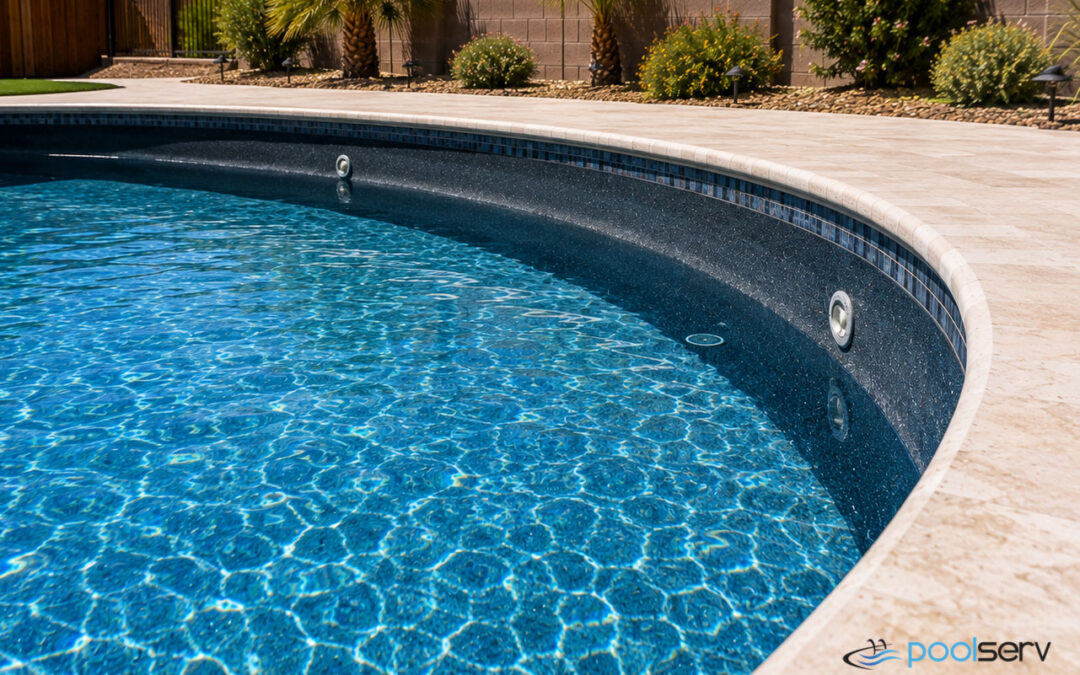
If you own a pool in Las Vegas, you’ve probably seen it: a chalky white crust creeping on the pool tile along the waterline, sometimes hard enough to scratch a fingernail against. That’s calcium scaling, and it’s one of the most common — and most stubborn — pool problems in the valley. The good news is it’s manageable once you understand why it happens here specifically.
Why Pool Tiles get Calcium Scaling
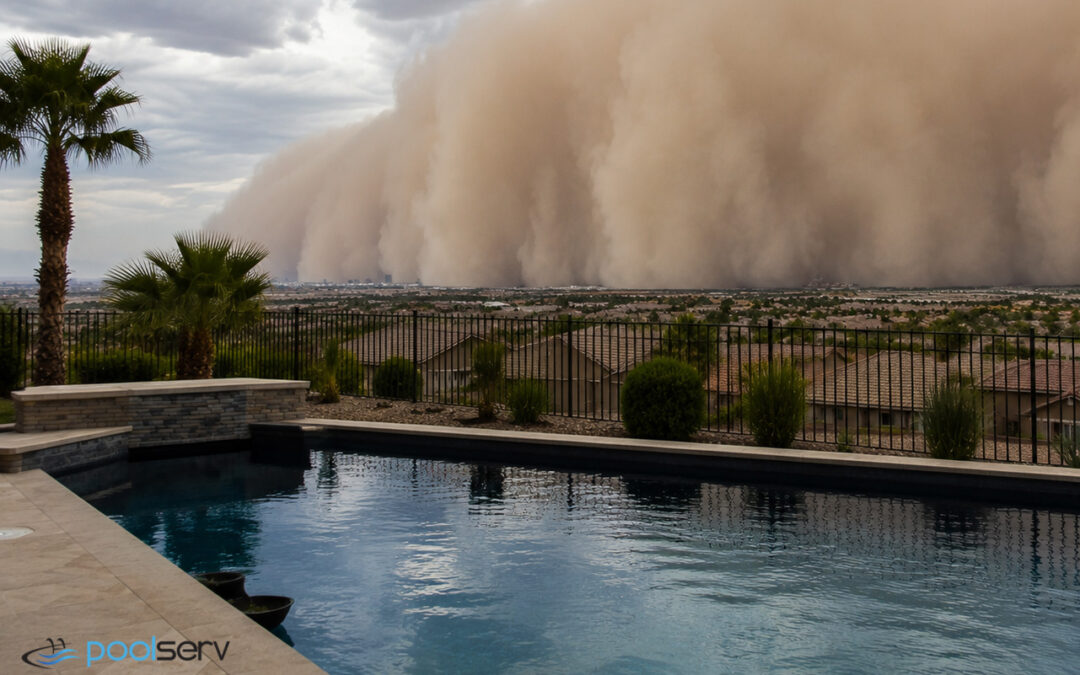
Las Vegas has some of the hardest water in the country. Our tap water is drawn largely from the Colorado River, which carries high levels of dissolved calcium and other minerals. When that water fills your pool and then evaporates in the desert heat, the water leaves — but the minerals stay behind. Over time they concentrate and bond to your tile, plaster, and equipment.
Two factors make it worse here than almost anywhere else:
- Extreme evaporation. Summer temperatures push evaporation rates through the roof, so you’re constantly adding hard water to top off the pool. Every refill adds more calcium.
- High pH and water temperature. Warm water and elevated pH both reduce calcium’s ability to stay dissolved, so it precipitates out and clings to surfaces.
There are two types of scaling. Calcium carbonate is the more common, softer white deposit — it’ll often flake or dissolve with acid. Calcium silicate is grayish-white, much harder, and typically means the buildup has been developing for a long time. Silicate scaling almost always requires professional scale removal or even pool retiling.
How to Remove Calcium Buildup on Pool Tiles
For light calcium carbonate deposits, some homeowners have success with a pumice stone (used only on hard pool tile, never on plaster or fiberglass) or a diluted muriatic acid solution. Work in small sections, wear eye and skin protection, and rinse thoroughly.
The problem is that DIY methods only address what you can reach and often leave micro-scratches on the tile that make future scaling worse. Any process using potentially dangerous acid or chemicals should be left to a pool cleaning professional. For heavier buildup, and for any calcium silicate, the reliable fix is bead blasting — a professional process that uses fine glass beads under pressure to strip the deposit without damaging the tile surface. It’s fast, thorough, and leaves the tile looking new. This is genuinely not a weekend DIY job once the scaling has set in. In the most extreme cases, we will recommend a pool re-tiling.
How to Prevent It From Coming Back
Removal is only half the battle. In our climate, prevention comes down to consistent water chemistry:
- Keep calcium hardness in range. Aim for roughly 200–400 ppm. Above that, scaling accelerates.
- Control your pH. Keep it between 7.4 and 7.6. High pH is the single biggest driver of new scaling.
- Watch total alkalinity. Keep it around 80–120 ppm to help stabilize pH.
- Run the pool pump and filter regularly. Circulation prevents the still, warm pockets where calcium loves to settle.
- Consider a sequestering agent. These bind minerals and keep them suspended so they can’t stick to surfaces — they are very useful given how much hard water we add through the summer.
Because Las Vegas evaporation forces so many pool refills, staying ahead of your chemistry is far more work here than in a milder climate. That’s why many owners hand it off to a weekly service that tests and balances the water every visit.
Get It Handled
If the calcium line on your pool tile is already thick or turning gray, it’s past the DIY stage. PoolServ handles professional pool cleaning and repair services across the Las Vegas valley to Commercial and Residential clients. Contact us for an assessment before the buildup affects your pool tile, plaster and equipment.